

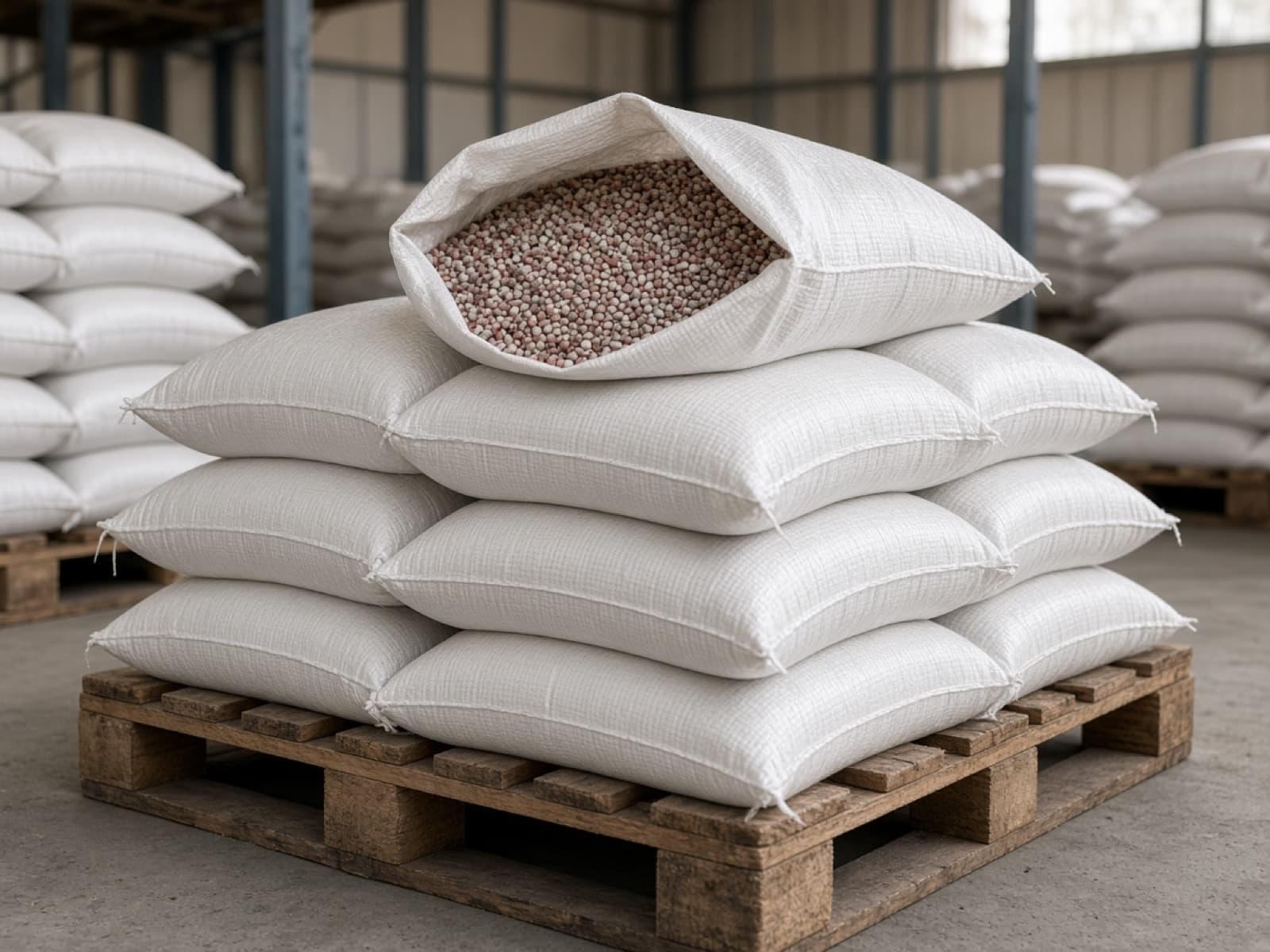
Buying kieserite fertilizer in bulk means settling four things: the grade your customers can use, the COA values you will hold the supplier to, the price basis you compare offers on, and how the cargo stays dry from load port to warehouse. Contracts and inspection follow the same logic as our [potash MOP/SOP guide](/blog-article/how-to-buy-bulk-potash-mop-sop-importers).
What kieserite is
Kieserite is magnesium sulfate monohydrate (MgSO4·H2O), a mineral fertilizer that supplies magnesium and sulfate sulfur in water-soluble form. Natural kieserite is mined from salt deposits alongside potash, and synthetic monohydrate is produced chemically. Importers sell it to blenders, distributors, and growers of magnesium- and sulfur-demanding crops such as oil palm, oilseed rape, sugar beet, and potatoes.
Kieserite grades
Granular kieserite
Granular kieserite is sized for mechanical spreading and for bulk blending with other granular fertilizers. Blenders and distributors buy it because a granule size matched to urea, DAP, or MOP keeps blends from segregating. Plantation and arable buyers use it for direct broadcast application. Ask for the size range and median particle size, and check that they match the other materials in your blends.
Kieserite powder and fine grades
Kieserite powder, sometimes sold as fine or standard grade, goes mainly to NPK and compound fertilizer plants that granulate it with other inputs, and to some plantation markets that spread it directly. It usually costs less to produce than granular material but is dustier and cakes more easily. Agree on the particle size distribution and the anti-caking treatment before you contract.
Natural vs synthetic kieserite
Natural kieserite is separated from mined crude salts. Synthetic magnesium sulfate monohydrate fertilizer is made by reacting a magnesium source such as magnesia with sulfuric acid. Both can meet a fertilizer spec, but impurity profiles differ: natural material tends to carry some chloride and other salts, while synthetic material reflects its raw materials. Some organic-certified markets accept only natural kieserite. Ask which route a supplier uses and check it against your registration and certifications.
Kieserite vs other magnesium sulfate sources
Kieserite and magnesium sulfate heptahydrate (MgSO4·7H2O) carry the same nutrients, but heptahydrate holds much more water of crystallization, so each kg of product delivers less MgO and S. As a reference point, K+S declares 25% water-soluble MgO and 52% water-soluble SO3 (20.8% S) for its ESTA Kieserit GRAN. (K+S product page and declaration data sheet). Heptahydrate is sold mostly for fertigation and foliar use, where fast, complete dissolution matters more than nutrient density.
| Product | Form | Nutrient density per kg | Typical B2B use |
|---|---|---|---|
| Kieserite (monohydrate) | Granular or powder | Higher Mg and S | Direct application, bulk blends, NPK feedstock |
| Magnesium sulfate heptahydrate | Crystals | Lower Mg and S (more water) | Fertigation, foliar, soluble blends |
| Potassium magnesium sulfate | Granular or powder | Adds K, less Mg than kieserite | Potash plus Mg and S in one product |
If your customers also need potassium, compare kieserite with potassium magnesium sulfate and SOP in our [potash guide](/blog-article/how-to-buy-bulk-potash-mop-sop-importers).
Specs to check on the COA
A kieserite COA should state total MgO, water-soluble MgO, sulfur (as S or SO3), free moisture, granule size distribution, and chloride. Better certificates also give insolubles and heavy metals, with a test method and the issuing lab for each line. Write into the contract which lab's analysis is final.
| Parameter | Why it matters |
|---|---|
| MgO % (total) | Main nutrient you pay for |
| Water-soluble MgO % | Shows how much Mg is plant available; often the declared value |
| S or SO3 % | Second nutrient; confirm which unit the COA uses |
| Free moisture | High moisture leads to caking and weight loss |
| Granule size / d50 | Spreadability and blend compatibility |
| Chloride | Matters for chloride-sensitive crops and some registrations |
| Insolubles | Affects solubility and residue |
| Heavy metals (Cd, Pb, As, etc.) | Limits depend on destination rules; check locally |
Packaging, shipping and storage
Kieserite ships as bulk in vessel holds for large lots, in big bags (FIBCs) for mid-size lots and container trades, and in smaller bags for distribution. It absorbs moisture and cakes under pressure, so store it dry and covered, keep stacks of big bags low, and protect steel structures from corrosion. Ask whether the product has an anti-caking coating.
Inspect vessel holds and containers for cleanliness and dryness before loading. For bagged cargo, specify bag material, liner, and weight per bag in kg, and confirm the bags are UV stabilized if they will sit outdoors at the port.
How bulk kieserite is priced
Kieserite price offers are quoted on a weight basis for the product, usually FOB at the load port or CFR/CIF at your discharge port. DAP or FCA terms appear in container and regional trades. Granular grades generally carry a premium over powder, and big bags and smaller bags add packing charges over loose bulk.
Grades differ in MgO and S content, so compare offers per kg of nutrient as well as per kg of product. Build a landed cost at your warehouse that includes freight, insurance, port charges, duties, and bagging. Price drivers to watch include the availability of natural material from mined deposits, sulfuric acid and magnesia costs for synthetic producers, freight, and seasonal demand in plantation markets.
Supplier checks for importers
To vet a kieserite supplier, confirm the producer and its mine or plant, ask whether the product is natural or synthetic, test a sample against the COA, and book an independent surveyor for sampling and weight at loading. Use payment terms that protect you, and check the supplier's track record on your route.
- Producer or trader: a trader should name the producer, and the certificate of origin should match.
- COA history: ask for COAs from recent shipments, not only a typical spec sheet.
- Sample: test the offered grade in your own lab before you contract.
- Inspection: have the surveyor check moisture, size, and nutrient content at loading.
- Payment terms: avoid large advances to unproven sellers; letters of credit or staged payments tied to inspection are safer.
- Price check: be wary of offers far below the market.
Import compliance
Many countries require fertilizer registration and specific labeling before sale, including declared nutrient contents and sometimes heavy metal limits. In the EU, products placed on the market under the Fertilising Products Regulation (EU) 2019/1009 need conformity with its product function category rules; national rules may also apply. Organic use needs separate approval. Requirements vary by country, so confirm registration, labeling, and customs classification with local authorities and your customs broker before shipment.
FAQ
What is kieserite fertilizer?
Kieserite fertilizer is magnesium sulfate monohydrate (MgSO4·H2O), supplying water-soluble magnesium and sulfate sulfur. It comes from natural salt deposits or is produced synthetically. Importers sell it as granular material for direct application and bulk blending, or as powder for NPK and compound fertilizer plants.
What is the difference between granular kieserite and kieserite powder?
Granular kieserite is sized for spreading and bulk blending, so blenders, distributors, and plantation buyers use it. Kieserite powder goes mostly to compound fertilizer plants that granulate it with other inputs. Granular material usually carries a price premium; powder is dustier and more prone to caking.
How does kieserite compare with magnesium sulfate heptahydrate?
Both supply magnesium and sulfur, but heptahydrate contains more water of crystallization, so it carries less MgO and S per kg. Kieserite suits soil application and blends. Heptahydrate is used mainly in fertigation and foliar programs where full solubility matters more than nutrient density per kg of freight.
How is bulk kieserite priced?
Bulk kieserite is quoted on a weight basis for the product, usually FOB or CFR/CIF, with DAP or FCA in some container and regional trades. Granular grades and bagged product carry premiums over powder and loose bulk. Compare offers per kg of MgO and S landed at your warehouse.
Ready to source or sell kieserite? Post a kieserite buy request on GetFertilizer with your grade, COA specs, quantity in kg, packing, and delivery terms, or list your kieserite if you are a supplier.