

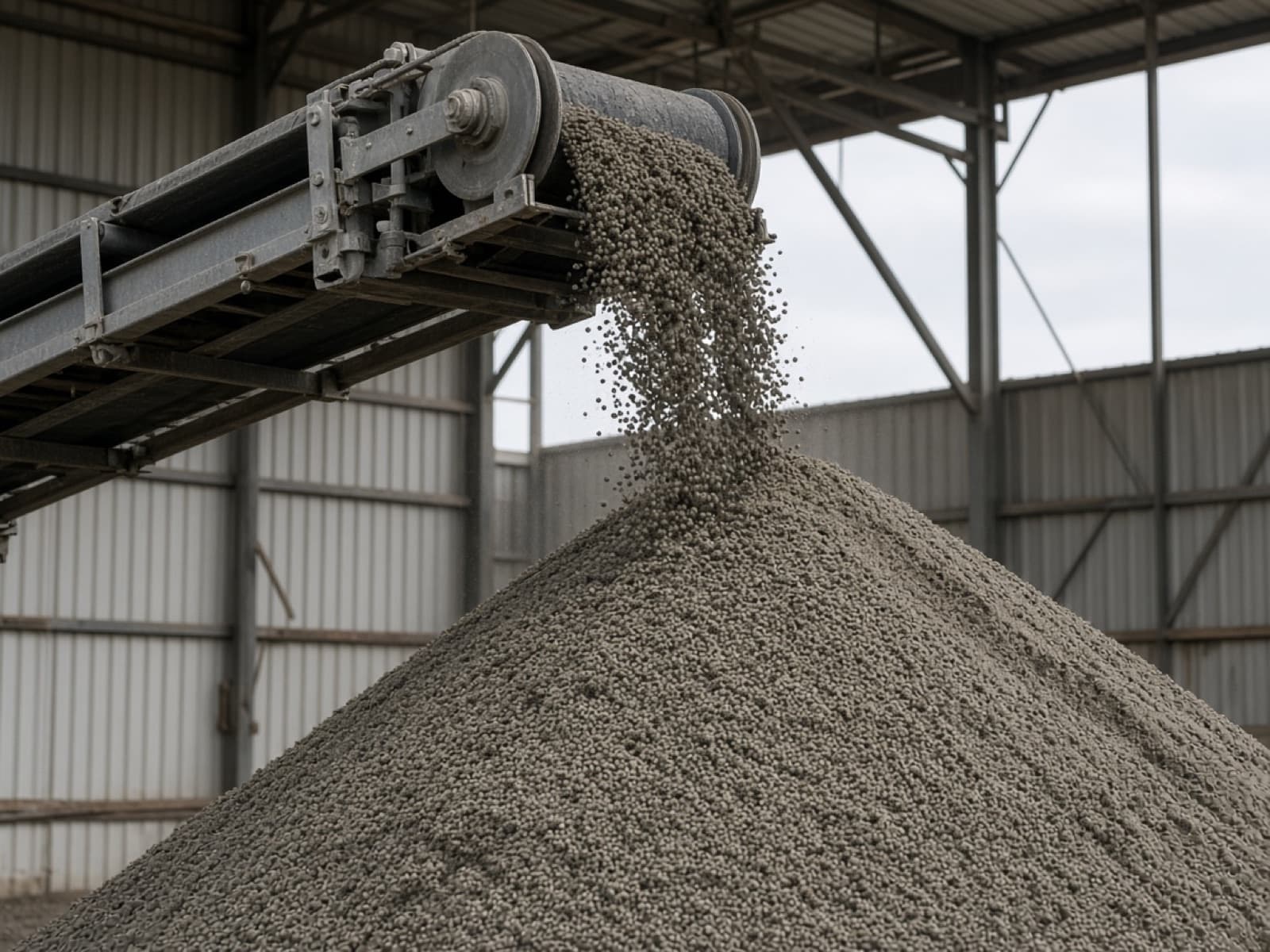
Buying triple superphosphate fertilizer in bulk comes down to four decisions: the grade and form your customers can use, the COA values you hold the supplier to, the price basis you compare offers on, and how the cargo stays dry and intact from load port to warehouse. If you are also weighing ammonium phosphates, read our [DAP/MAP buying guide](/blog-article/how-to-buy-bulk-dap-map-fertilizer-importers) alongside this one.
What triple superphosphate is
Triple superphosphate (TSP) is a nitrogen-free phosphate fertilizer made by reacting finely ground phosphate rock with phosphoric acid. The product is mainly monocalcium phosphate, Ca(H2PO4)2·H2O, and it cures for several weeks after production while the reactions finish. Mosaic notes that TSP has the highest phosphorus content of any dry fertilizer that contains no nitrogen. (Mosaic Crop Nutrition, Triple Superphosphate)
TSP grades and forms
Granular vs powdered
Granular triple superphosphate is made by spraying the reacted slurry onto small particles to build granules of the target size. Nongranular (powdered or run-of-pile) TSP comes from reacting rock and acid in a mixer without that granulation step (Mosaic). Blenders and distributors usually buy granular material sized to match urea, MOP, or DAP. Compound fertilizer plants that granulate their own NPK may take powder instead.
Nominal P2O5 grade and total vs water-soluble vs citrate-soluble
"TSP 46" is a trade name for the nominal grade: the number is the declared P2O5 content as a percentage of product weight. It is a label, so the actual figure on any lot depends on the rock and the process. Treat it as a minimum to write into the contract, and confirm it on the COA.
COAs split P2O5 into total, water-soluble, and citrate-soluble (neutral ammonium citrate) fractions. Water-soluble P2O5 is available to the crop fastest. Mosaic states that over 90 percent of the total P in TSP is water soluble (Mosaic). Agree which fractions are guaranteed and which test methods apply.
TSP vs SSP vs DAP/MAP
TSP and single superphosphate (SSP) both start from phosphate rock. SSP uses sulfuric acid and contains monocalcium phosphate plus gypsum, so it carries sulfur and calcium but much less phosphorus. TSP uses phosphoric acid and is more concentrated, which cuts freight and handling cost per kg of P2O5. Pick SSP when your market needs sulfur along with P. (Mosaic, Single Superphosphate)
DAP and MAP add nitrogen. Mosaic gives MAP as 11 percent N and 52 percent P2O5, a higher total nutrient content than TSP (Mosaic). TSP is the better choice when the buyer wants phosphorus without nitrogen: legume crops, blends where nitrogen comes from a separate source, or formulations that need P and calcium. Mosaic gives a calcium content of 15 percent for TSP.
| Product | Made from | Nutrients besides P | Typical B2B use |
|---|---|---|---|
| TSP | Phosphate rock + phosphoric acid | Calcium; no nitrogen | Bulk blends, legumes, N-free P supply |
| SSP | Phosphate rock + sulfuric acid | Sulfur and calcium (gypsum) | Markets short of both P and S, pastures |
| MAP / DAP | Phosphoric acid + ammonia | Nitrogen | NP supply, blends, direct application |
Specs to check on the COA
A TSP COA should give total P2O5, water-soluble P2O5, citrate-soluble P2O5, free acid, moisture, and granule size, with the test method and issuing lab for each line. For granular cargo, also ask for hardness or crushing strength. Cadmium and other heavy metals matter because phosphate rock sources differ. State in the contract which lab's result is final.
| Parameter | Why it matters |
|---|---|
| Total P2O5 % | Main nutrient you pay for; check against the nominal grade |
| Water-soluble P2O5 % | Readily available phosphorus; often the guaranteed figure |
| Citrate-soluble P2O5 % | Part of the available P under many registration rules |
| Free acid | High free acid can corrode equipment and cause caking |
| Moisture | Affects caking, flow, and weight |
| Granule size distribution | Spreading and blend segregation |
| Hardness / crushing strength | Breakage and dust during handling |
| Cadmium and heavy metals | Limits set by destination rules; check locally |
Packaging, shipping and storage
TSP ships loose in vessel holds for large lots, in big bags (FIBCs) for mid-size lots and container trades, and in 50 kg bags for distribution. Specify bag material, liner, and weight per bag in kg. Keep it dry and covered: moisture leads to caking and dust, and soft granules break down with repeated handling. Inspect holds and containers for cleanliness and dryness before loading.
Before blending TSP with other materials, especially urea, check compatibility with your producer or blending consultant. We have not cited a source on this here, so get product-specific guidance for your own blend recipes.
How bulk TSP is priced
TSP fertilizer price offers are quoted on a weight basis for the product, usually FOB at the load port or CFR at your discharge port. DAP (Delivered at Place) terms show up in container and regional trades. Do not confuse the Incoterm with the fertilizer. Granular material and bagged product generally carry premiums over powder and loose bulk.
The main price drivers are phosphate rock and phosphoric acid costs, origin, freight, and grade. Because grades differ, compare offers per kg of P2O5 as well as per kg of product, and build a landed cost at your warehouse that includes freight, insurance, port charges, duties, and bagging. Mosaic notes that TSP can cost more to produce than ammonium phosphates, so check the cost per kg of nutrient against DAP and MAP offers.
Supplier checks for importers
To vet a triple superphosphate supplier, confirm the producer and plant, ask for COAs from recent shipments, test a sample in your own lab, and book an independent surveyor for sampling and weight at loading. Use payment terms that protect you, and look at the seller's track record on your route.
- A trader should name the producer, and the certificate of origin should match.
- Ask for real shipment COAs, not only a typical spec sheet.
- Test cadmium and heavy metals if your destination limits them.
- Have the surveyor check P2O5, moisture, and granule size at loading.
- Avoid large advances to unproven sellers. Letters of credit or staged payments tied to inspection are safer.
- Be wary of offers far below the market.
Import compliance
Many countries require fertilizer registration and specific labeling before sale, including declared P2O5 fractions and, in some markets, cadmium or other contaminant limits. The EU, for example, regulates fertilizing products at EU level and in national law. We have not cited specific limits here, so confirm registration, labeling, contaminant limits, and customs classification with local authorities and your customs broker before shipment.
FAQ
What is triple superphosphate fertilizer?
Triple superphosphate is a concentrated phosphate fertilizer made by reacting phosphate rock with phosphoric acid. It is mainly monocalcium phosphate and contains no nitrogen. Importers sell granular TSP to blenders and distributors, and powdered TSP to compound fertilizer plants. Most of its phosphorus is water soluble, so crops can take it up quickly.
What does TSP 46 mean?
TSP 46 is the nominal grade: 46 is the declared P2O5 content as a percentage of product weight. Actual lots vary with the phosphate rock and process. Write the minimum total and water-soluble P2O5 into the contract and check both on the COA and the independent inspection report for each shipment.
Should I buy TSP or DAP?
Choose TSP when your customers want phosphorus without nitrogen, for legumes or for blends where nitrogen comes from urea or another source. DAP and MAP carry nitrogen and more total nutrients per kg. Compare landed cost per kg of nutrient. Our [DAP/MAP guide](/blog-article/how-to-buy-bulk-dap-map-fertilizer-importers) covers those products.
How is bulk TSP priced?
Bulk TSP is quoted on a weight basis for the product, usually FOB or CFR, with DAP terms in some container and regional trades. Phosphate rock and phosphoric acid costs, origin, freight, grade, and packing all move the price. Compare offers per kg of P2O5 landed at your warehouse, not just the headline figure.
Ready to source or sell TSP? Post a triple superphosphate buy request on GetFertilizer with your grade, COA specs, quantity in kg, packing, and delivery terms, or list your TSP if you are a supplier.