

This guide is for importers, distributors and traders buying amino acid fertilizers and protein hydrolysate biostimulants in bulk for farm use. Dietary supplements, feed-grade and pharmaceutical amino acids, and small packs for hobby or home growers are left out, because they run on different specifications, rules and markets.
What amino acid fertilizer is in the trade
Most product sold under this name is a protein hydrolysate. A review by Colla et al. (2017) describes hydrolysates as "mainly peptides and free amino acids", from sources such as "collagen from leather by-products, fish by-products, legume seeds". In the EU, fertilizer and biostimulant are separate legal categories, so settle which one first.
Free vs total amino acids
Total amino acids include those bound in peptides, measured after full hydrolysis; free amino acids are the unbound ones. The EU feed method in Regulation (EC) No 152/2009, Annex III, part F "cannot differentiate between D and L forms" and "is not valid for the determination of tryptophan", so results depend on the method.
We found no published CEN/TC 455 amino acid method, and ISO/DIS 25300 for free amino acids is still a draft. Name the method in the contract and ask for the full aminogram, plus peptide molecular weight distribution if measured.
Source and hydrolysis method
Animal-based hydrolysates
Colla et al. report that animal-derived hydrolysates are "usually produced through chemical hydrolysis" with hydrochloric or sulphuric acid above 121°C. In that process "tryptophan, cysteine, serine and threonine are partially or totally destroyed" and many amino acids convert from the L form to the D form (racemisation). Collagen-derived hydrolysates "typically contain significant amounts of hydroxyproline and hydroxylysine, which can be used as markers".
Plant-based hydrolysates
The same review says plant hydrolysates use "enzymatic hydrolysis using proteolytic enzymes and temperature below 60°C", which leaves more peptides relative to free amino acids and more L-forms. For a "plant origin" offer, ask for a hydroxyproline result.
COA checklist
| Parameter | Why it matters | Where to verify |
|---|---|---|
| Total and free amino acids, with method | Methods are not comparable | ISO/IEC 17025 lab report |
| Aminogram, tryptophan method | Acid hydrolysis destroys tryptophan | Lab report |
| Total N, organic carbon | Needed if sold as PFC 1(A) | Lab report, spec |
| Dry matter, pH, density for liquids | Basis for per kg or per L terms | Spec sheet, SDS section 9 |
| Chloride, EC | Acid process residue | Lab report |
| Stability, settling, shelf life | Liquid storage | Spec sheet |
| Cd, Pb, Hg, Ni, inorganic As, Cr(VI), Cu, Zn | PFC 6 limits | Lab report vs 2019/1009 |
| Total Cr | Source data needed above 200 mg/kg dry matter | Lab report, technical file |
| Salmonella; E. coli or enterococci | PFC 6(B) pathogen limits | Lab report |
| Hydroxyproline | Collagen marker | Lab report |
| Raw material and process | CMC and by-product status | Supplier declaration |
EU 2019/1009 rules
PFC 6 covers products that stimulate "plant nutrition processes independently of the product's nutrient content with the sole aim of improving" "(a) nutrient use efficiency, (b) tolerance to abiotic stress, (c) quality traits, or (d) availability of confined nutrients in the soil or rhizosphere." It "shall have the effects that are claimed on the label". A hydrolysate is PFC 6(B), non-microbial.
PFC 6 limits, in mg/kg dry matter, are Cd 1,5, Cr VI 2, Pb 120, Hg 1, Ni 50, inorganic As 40, Cu 600 and Zn 1 500. Under PFC 6(B), Salmonella must be absent in 25 g or 25 ml, and E. coli or enterococci must not exceed 1 000 in 1 g or 1 ml. The word "enterococci" replaced "Enterococcaceae" under Delegated Regulation (EU) 2024/2786.
The Annex III label states the "effect claimed for each target plant". Annex IV says Module A "must not be used" for PFC 6. Since Delegated Regulation (EU) 2021/1768, Modules B+C apply to a biostimulant only if every component is on the Module B list; otherwise Module D1.
CMC 2, as amended by 2021/1768, allows only "cutting, grinding, milling, sieving, sifting, centrifugation, pressing, drying, frost treatment, freeze-drying, extraction with water, supercritical CO2 extraction, or fiberisation". Hydrolysis is not listed, so plant hydrolysates normally enter under CMC 1, which requires REACH registration unless exempt.
CMC 10 takes derived products under Regulation (EC) No 1069/2009 that reached the end point and "are listed in the following table". Delegated Regulation (EU) 2023/1605, Article 4(1)(f), sets an end point for hydrolysed protein made in the Union ("other than those imported into the Union") in approved plants, at up to 5 % by volume unless packaging conditions are met. The table's only entry is processed manure, added by Delegated Regulation (EU) 2024/1682, the latest CMC 10 change we found. Animal hydrolysates therefore stay under 1069/2009 and national rules. Regulation (EU) No 142/2011, Annex X allows only Category 3 material for hydrolysed protein, and ruminant-derived hydrolysed protein "shall have a molecular weight below 10 000 Dalton". Annex XIV requires imported hydrolysed protein to meet that standard and come with a health certificate.
A product whose function is "to provide nutrients" is a fertiliser. PFC 1(A) requires "nutrients of solely biological origin", and a liquid organic fertiliser declaring only N needs at least 2 % total N and 5 % organic carbon by mass. A blend of separately assessed EU products is PFC 7. CE marking is optional: recital 5 keeps national-law products on the market.
REACH Annex V, point 8, exempts natural substances "if they are not chemically modified"; the Article 3(39) definition does not list hydrolysis. A PEVESA Biotech SDS shows a vegetable protein hydrolysate registered under REACH (01-2119980073-39-0011). Ask for the number or a written exemption basis.
For organic farming, Implementing Regulation (EU) 2021/1165, Annex II lists "Hydrolysed proteins of plant origin", and lists animal "Hydrolysed proteins" with the condition "Not to be applied to edible parts of the crop". Amending acts through 2025/2501 leave both entries unchanged. legislation.gov.uk shows EU text as of 31 December 2020, so confirm the consolidated EU text too.
Packing and bulk handling
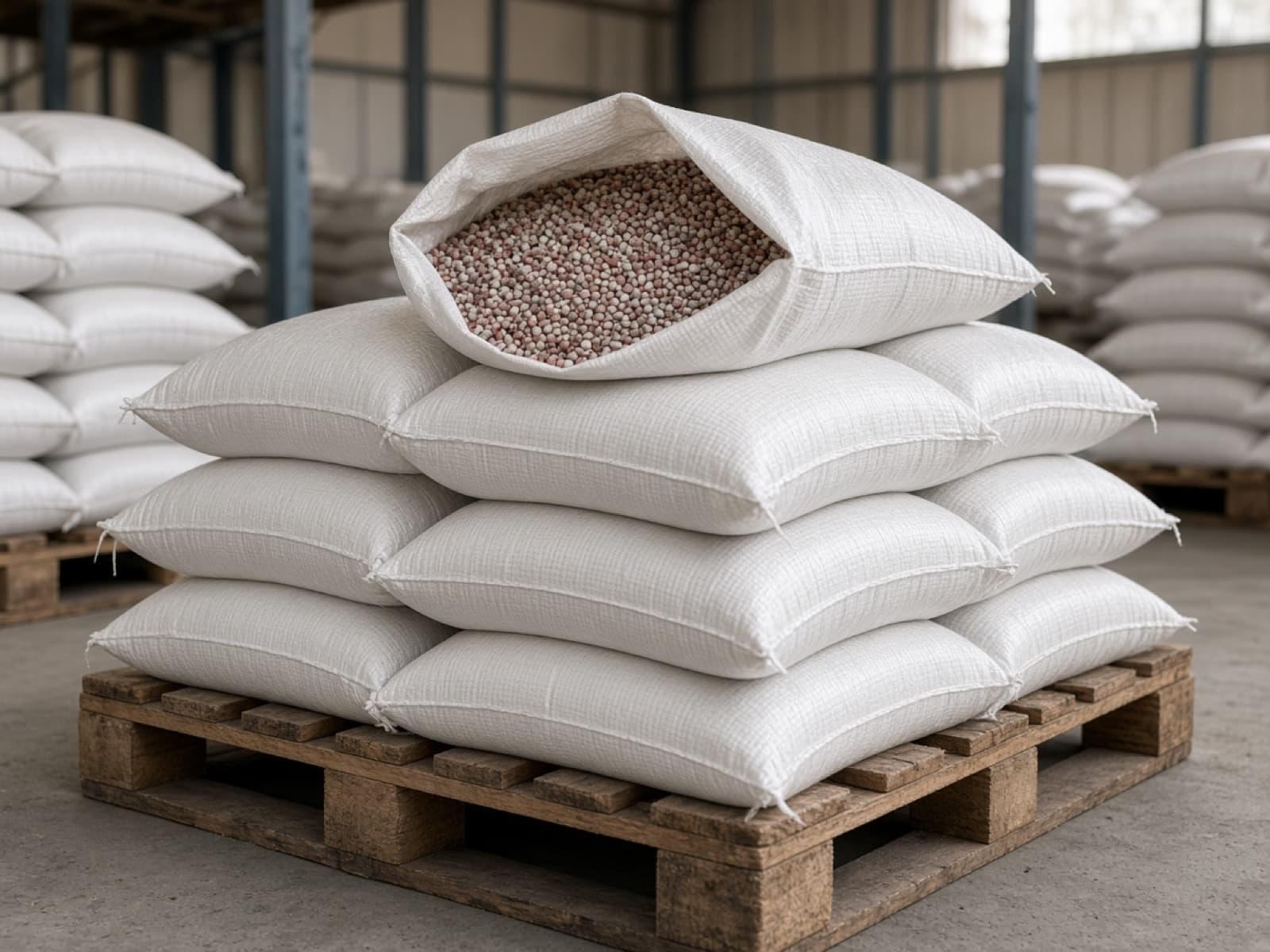
Powders ship in bags and big bags (kg), liquids in jerrycans, IBCs and flexitanks (L). The PEVESA SDS gives relative density 1.15 kg/L, storage "at temperatures not exceeding 30°C" and "in a dry place", and "Not classified as dangerous for transport". Check section 14 for each cargo.
How prices are quoted
Powder is quoted per kg, and liquid per kg or per L, under a named ICC Incoterms 2020 rule such as EXW, FCA, FOB, CFR, CIF or DAP. For liquids, agree the unit and density. Tie price to a minimum amino acid content by a named method, with tolerance and rejection terms, sample approval and who pays for retests.
Supplier checks before you sign
- Producer or trader status, plus a raw material and process declaration.
- A recent COA and an independent retest by the same method.
- For CE-marked product, the EU declaration of conformity and notified body certificate.
- For animal-based product, the plant's approval under 1069/2009 and the health certificate.
- Aminograms from several recent lots, compared for batch consistency.
- A sealed reference sample from loading, labelled by both sides, kept for the shelf life.
- A named referee lab and method whose result settles disputes.
FAQ
What is the difference between free and total amino acids?
Free amino acids are unbound; total amino acids add those bound in peptides. The COA should name the method.
What is the difference between enzymatic and acid hydrolysis?
Per Colla et al. (2017), acid hydrolysis destroys tryptophan and some other amino acids and racemises others; enzymatic hydrolysis keeps more peptides and L-forms.
What should an amino acid fertilizer COA include?
Amino acids with methods, aminogram, N, organic carbon, chloride, PFC 6 metals, total Cr, pathogens and origin.
How are amino acid biostimulants regulated in the EU?
As PFC 6(B), with only the four PFC 6 claims. Plant hydrolysates usually use CMC 1; animal ones need a CMC 10 listing, which hydrolysed protein lacks.
Source amino acid fertilizer
See the humic acid guide and how to test fertilizer quality, or request quotes on GetFertilizer.
Sources
- Colla G. et al. (2017), Biostimulant action of protein hydrolysates, Frontiers in Plant Science 8:2202
- Regulation (EU) 2019/1009, Annexes I to IV and recitals, via legislation.gov.uk (text as of 31 December 2020)
- Commission Delegated Regulation (EU) 2021/1768 (CMC 2 wording; Annex IV point 3.2)
- Commission Delegated Regulation (EU) 2023/1605 (end points, Article 4(1)(f))
- Commission Delegated Regulation (EU) 2024/1682 (CMC 10 table)
- Commission Delegated Regulation (EU) 2024/2786 (enterococci)
- Commission Regulation (EU) No 142/2011, Annex X and Annex XIV, via legislation.gov.uk
- Commission Regulation (EC) No 152/2009, Annex III, part F
- Regulation (EC) No 1907/2006 (REACH), Article 3 and Annex V, via legislation.gov.uk
- Commission Implementing Regulation (EU) 2021/1165, Annex II
- ISO/DIS 25300, Determination of free amino acids (draft, ISO/TC 134)
- PEVESA Biotech, vegetable protein hydrolysate SDS, revision 23 November 2020
- ICC Incoterms 2020