

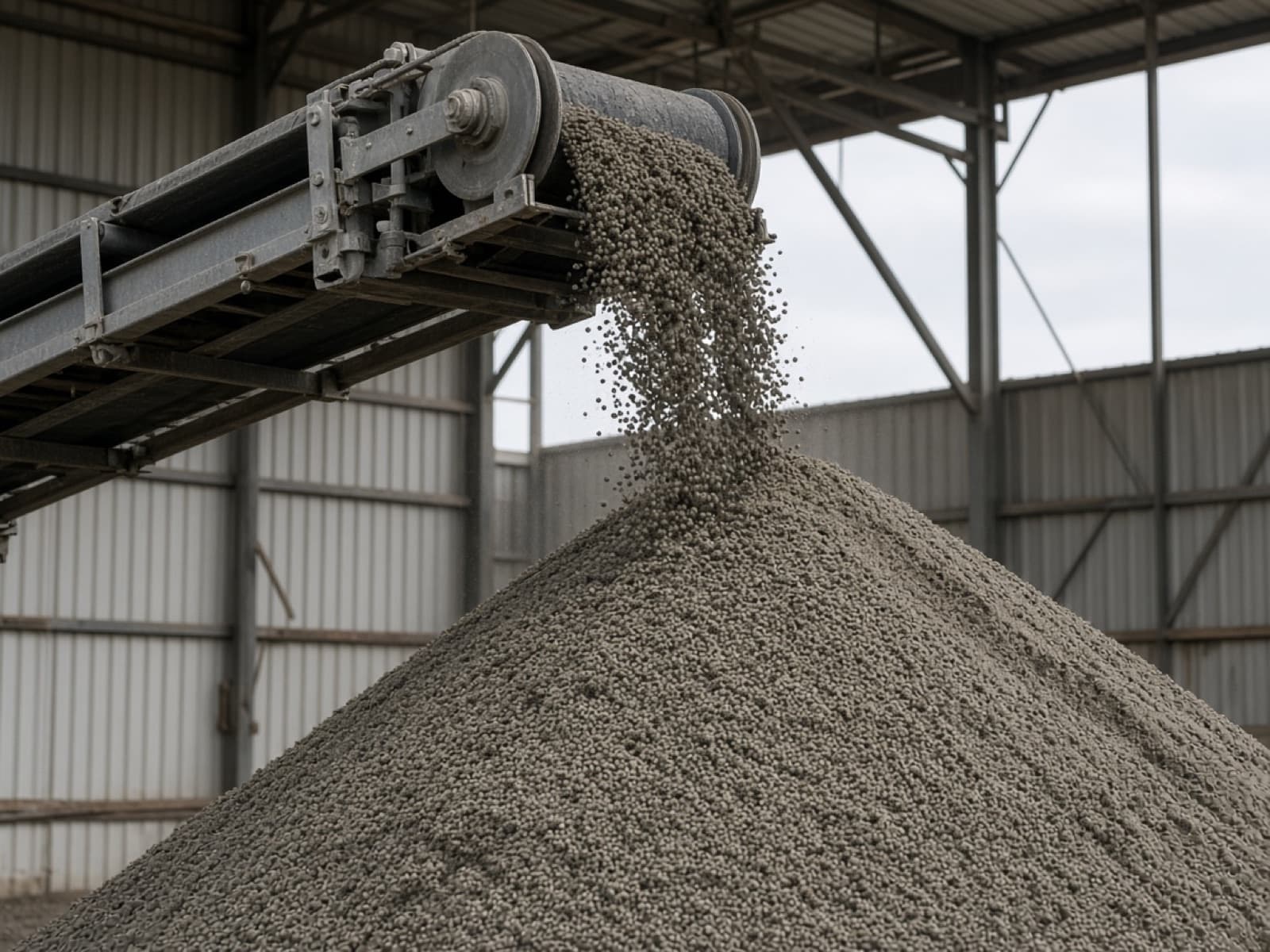
Diammonium phosphate (DAP) and monoammonium phosphate (MAP) are the two phosphate fertilizers most importers trade in volume. This guide is for importers, distributors, blenders, and traders buying bulk DAP fertilizer or MAP by the cargo, in big bags, or in containers. It covers how the two products differ commercially, which specs belong in the contract, how phosphate prices are usually quoted, and what to check before you commit to a supplier.
If you have read our guides on bulk urea and bulk NPK, the general shipping and payment mechanics (Incoterms, letters of credit, pre-shipment inspection) work the same way here. This article stays on what is specific to phosphates.
DAP vs MAP: what changes on the contract
Both products come from the same chain. Phosphate rock is treated with sulfuric acid to make phosphoric acid, and the acid is neutralized with ammonia. MAP uses less ammonia per unit of phosphoric acid than DAP. The result is two different nutrient guarantees.
Standard grades
The standard commercial grades are:
- DAP 18-46-0: 18% nitrogen and 46% P2O5
- MAP 11-52-0: 11% nitrogen and 52% P2O5
You will also see lower-analysis MAP offers (for example 10-50-0 or 11-44-0) and DAP offers below 18-46 from some plants or rock sources. These can be legitimate products, but they are not interchangeable with the standard grades. Price them on nutrient content, and make sure the grade on the offer matches the grade on the certificate of analysis.
Which one your customers want
The choice is usually made downstream. DAP carries more nitrogen per kg and is the default phosphate in many markets. MAP carries more phosphate per kg, which lowers freight and handling cost per unit of P2O5. MAP is also slightly acidic in the soil around the granule. DAP creates a temporarily alkaline zone and can release some free ammonia, which matters to growers placing fertilizer close to seed. If you supply blenders, ask what they are formulating. A blender making high-phosphate NPK grades may prefer MAP for its higher P2O5 content.
Fertilizer grade vs technical grade
Granular DAP and MAP are fertilizer grade. Technical or water-soluble MAP, commonly sold as 12-61-0, is a crystalline product for fertigation and industrial uses. It has tighter limits on insolubles and a different price. Do not let a supplier quote one against an inquiry for the other.
Specs to put in your bulk DAP fertilizer RFQ
Phosphate disputes usually come from physical quality or from how P2O5 was measured. Write minimum or maximum values for:
- Total nitrogen (min)
- Available P2O5 (min), stating whether it is measured as water-soluble plus citrate-soluble or by another method
- Water-soluble P2O5 as a share of available P2O5, if your market regulates it
- Moisture (max)
- Granule size, for example the share between 2 and 4 mm, which is a range commonly quoted in trade specs
- Crushing strength, if product goes through blending plants or long conveyor runs
- Dust and fines
- Anti-caking or anti-dust coating, and whether it is included
- Heavy metals, especially cadmium, where your destination sets a limit
Color is a common argument and a poor quality test. DAP and MAP range from light gray to dark brown or black depending on the rock source and process. Only specify color if your buyers will reject product on appearance. If they will, put it in writing.
Leaving physical specs as "seller's standard" is risky with phosphates. They can cake if they pick up moisture in storage or transit, and soft granules break down into dust during discharge. Both problems turn into weight and quality claims.
Cadmium and import rules
Phosphate rock contains varying amounts of cadmium and other trace elements, and some carries over into DAP and MAP. Several jurisdictions limit it. The EU Fertilising Products Regulation (EU) 2019/1009, for example, sets a cadmium limit for phosphate fertilizers sold as EU fertilizing products, expressed in mg per kg of P2O5. Other countries have their own limits and registration rules.
Before you buy, check the current limit at your destination and ask the supplier for a recent heavy-metals analysis from the same plant and rock source. Write the limit into the contract and the inspection scope. A cargo that meets nutrient specs but fails a cadmium test at the destination may not clear customs.
How bulk DAP and MAP prices are quoted
Phosphates are priced on a weight basis, per unit of product, usually as FOB at the loading port or CFR to the destination port. Price reporting agencies publish regular FOB and CFR assessments for the main origins and import markets. The World Bank's monthly commodity price data includes DAP, which is a free public reference for longer-term trends.
When you compare offers:
- Convert each to the same basis (FOB plus your freight, or CFR) before comparing
- Check whether bagging, coating, and inspection costs are included
- Compare MAP and DAP on cost per unit of nutrient as well as cost per kg, because their P2O5 content differs
- Note the offer validity. Phosphate offers often have short validity when the market is moving
Several things move phosphate prices: phosphate rock supply, ammonia and sulfur costs, export policy at major producing origins, and seasonal demand in large import markets. In recent years some major producing countries have restricted or slowed phosphate exports at times. Check current policy at the origin before you rely on an offer for a forward delivery window.
Logistics and handling
Large importers usually take DAP and MAP as loose bulk by vessel. Smaller buyers take big bags or containerized bagged lots. For bulk shipments, ask the shipper how the cargo is described and declared under the IMSBC Code, and confirm that holds are clean and dry before loading. Rain during loading or discharge is a common cause of caking claims, so agree how weather stoppages are handled in the charter or sales terms.
If you blend, granule size should match your other raw materials, typically urea and MOP. Mismatched sizes segregate in storage and in spreader trucks, and the finished blend stops matching its label. Ask the phosphate supplier for size distribution data and compare it with what you already buy.
Supplier checks specific to phosphates
The usual checks still apply: capacity, export references, payment terms, and sanctions screening. For DAP and MAP, also ask:
- Is the seller the producer or a trader, and which plant will the product come from?
- What is the phosphate rock source? It affects color, impurities, and sometimes P2O5 consistency.
- Can they provide certificates of analysis from previous shipments of the same grade, including heavy metals?
- Does the plant apply coating at production or at the port?
- Can they meet your granule size and crushing strength specs consistently, or only on selected lots?
- Are there export permits, inspections, or quotas at origin that could delay loading?
If a trader cannot name the producing plant, treat the quality documents with more caution and insist on independent inspection at loading.
RFQ checklist for DAP and MAP
Send the same fields to every supplier so the replies can be compared:
- Product and grade: DAP 18-46-0, MAP 11-52-0, or the exact alternative grade
- Fertilizer grade or technical grade
- Quantity (kg), with tolerance
- Nutrient specs: N min, available P2O5 min, water-soluble P2O5 if required, and test method
- Physical specs: moisture max, granule size range, crushing strength, dust
- Coating requirement
- Heavy-metal limits, including cadmium, for your destination
- Color, only if it is a commercial requirement
- Packaging: bulk, FIBC size, or bag size and material
- Incoterm with named port, plus delivery window
- Inspection: who nominates, who pays, sampling point, and scope (nutrients, physicals, heavy metals)
- Documents: certificate of analysis, safety data sheet, certificate of origin, bill of lading type, and any registration papers your destination requires
- Payment terms and currency
- Offer validity and producing plant
Reject replies that leave out the producing plant, test method, or heavy-metals data. Without them you have little to argue from if the cargo is disputed.
On GetFertilizer you can send one structured request to several DAP and MAP suppliers at once. Settle the grade, physical specs, and cadmium limit before you send it, so every price you get back is on the same basis.