

Importers buying single superphosphate (SSP) need a contract that separates available phosphate from total phosphate and fixes moisture limits for the chosen form. Before ordering single superphosphate fertilizer, agree which laboratory methods will determine whether the cargo meets the contract.
What SSP is and who buys it in bulk
SSP supplies phosphorus, sulphur and calcium. It suits distributor specifications that call for phosphate alongside sulphur. Buying decisions should account for both nutrients.
Nutrient profile
SPIC's product specification declares minimum available P2O5 of 16%, minimum water-soluble P2O5 of 14.5% and minimum sulphate sulphur of 11%, for both powder and granules. Use those figures to evaluate SPIC's offer; request the actual guarantees from any other producer. Calcium is present, but that sheet gives no guaranteed calcium percentage; request one if calcium forms part of your sales specification.
How it is made
Ground phosphate rock reacts with sulphuric acid to produce monocalcium phosphate and gypsum, which remains in the product and supplies calcium and sulphur. Mosaic's IPNI-derived SSP note describes curing followed by milling, screening or granulation.
Grades and forms
Powder vs granular
SPIC sells powder and granular SSP with different moisture ceilings: 12% for powder and 5% for granules. Name the required form in the RFQ. Matching phosphate results do not make powder acceptable under a granular contract.
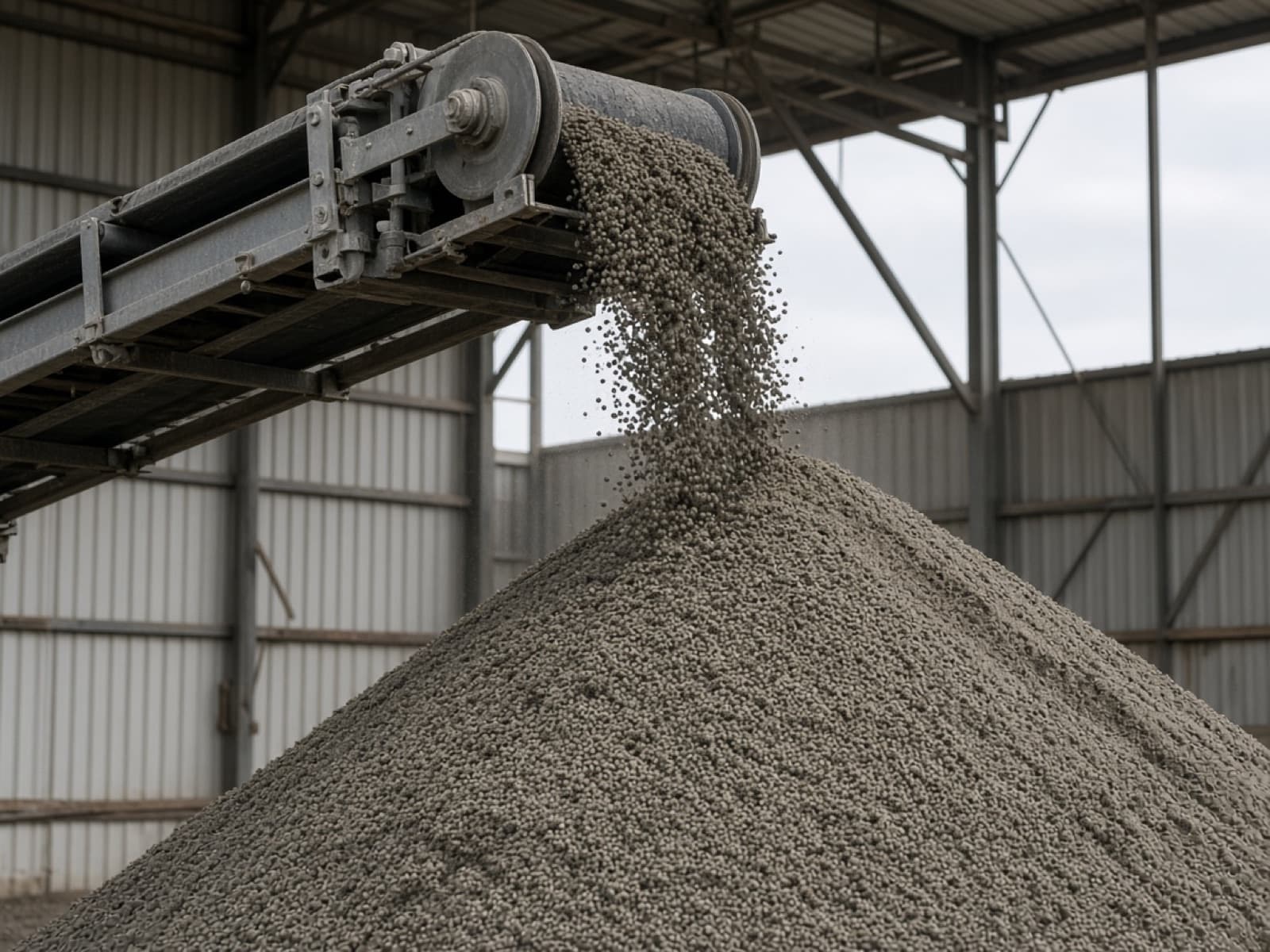
For granular single superphosphate, agree a sieve distribution and limits for fines using the supplier's test method. Ask for samples that represent the offered cargo and check them against the receiving plant's handling requirements. Do not assume all export cargoes are granular.
Fortified grades
BEC Fertilizers lists boronated SSP in powdered and granular forms, plus zinc-fortified SSP. These require their own micronutrient guarantees and destination-market label checks. A standard SSP data sheet does not establish the composition of a fortified product.
SSP vs TSP for importers
TSP is a more concentrated phosphate fertilizer; SSP also carries sulphur in its gypsum fraction. Mosaic notes that SSP's advantage over other phosphate products often comes from the sulphur or calcium it supplies, while buying it solely for phosphorus can be less economical.
Compare landed cost against guaranteed phosphate, then account for sulphur and calcium if your customers need them. Lower phosphate concentration means more cargo weight must move to deliver the same phosphate quantity. Freight, handling and inland delivery can therefore change the ranking of competing offers.
Choose SSP when the combined nutrient package fits an established distributor specification. Consider TSP when phosphate concentration and transport efficiency matter more. Our TSP buying guide covers that product's checks; use the DAP/MAP guide when evaluating ammoniated phosphates instead.
How bulk SSP is priced
Quote basis
The single superphosphate price should be quoted on a weight basis with an Incoterm such as FOB, CFR or CIF and a named port. State whether the offer covers loose bulk or bagged material, and identify packing charges, inspection costs and the quote's validity.
What to compare
Ask suppliers how phosphate rock, sulphuric acid and freight affect the offer, and whether seasonal loading demand changes availability. Compare the same guaranteed analysis and packaging. Allow for moisture, handling losses and inland delivery when calculating what the guaranteed nutrients will cost at destination.
COA and specification checks
Require a certificate of analysis for the shipment lot. A brochure gives product guarantees, but it does not report the cargo test results. Keep total, available and water-soluble phosphate on separate lines.
| Parameter | Why it matters | Where to verify |
|---|---|---|
| Total and water-soluble P2O5 | Different measurements cannot substitute for each other; also check available phosphate | Lot COA, agreed laboratory methods and contract |
| Free phosphoric acid | Sets an acidity acceptance limit | COA against the supplier guarantee; SPIC specifies 4% maximum as P2O5 |
| Moisture | Affects acceptance and the amount of dry material received | Lot result against the limit for powder or granules |
| Sulphur | Confirms the sulphate nutrient guarantee | COA stating sulphate sulphur as S |
| Calcium | Needed if sold with a calcium guarantee | Producer declaration and supporting test |
| Particle size | Checks fines and compatibility with handling equipment | Agreed sieve analysis and loading inspection |
| Cadmium and other heavy metals | Determines whether the cargo meets destination limits | Accredited laboratory report and applicable legal category |
Specify whether each result is on an as-received or dry-matter basis. Agree sampling, retained samples and the procedure for disputed results before loading.
Compliance and import documents
For CE-marked EU fertilising products, Regulation (EU) 2019/1009, Annex I, PFC 1(C)(I) sets contaminant limits. Its phosphate-fertilizer cadmium ceiling, where total P2O5-equivalent is at least 5% by mass, is 0.000060 kg cadmium/kg P2O5. Other ceilings include lead at 0.000120 kg/kg dry matter and mercury at 0.000001 kg/kg dry matter. These values are converted to kg from the regulation's published units.
The same section covers hexavalent chromium, nickel, arsenic and other contaminants. Check the current consolidated text, product classification and any applicable national cadmium provisions before contracting. These EU figures are not worldwide import limits, and a COA alone does not establish CE compliance.
Ask your broker to confirm the document list: COA, certificate of origin, commercial invoice, packing list, transport document and SDS, plus registration or import permits where required. Request a phytosanitary certificate only if the destination authority requires it for the shipment or associated materials.
Packing, shipping and storage
SPIC publishes 50 kg HDPE bags for both forms. Confirm availability with the producer before specifying larger bags or loose bulk vessel loading. Put net fill, bag construction, moisture protection and marking into the packing specification.
Arrange clean, dry cargo spaces and weather protection during loading. Keep stored bags off wet floors and protect them from water ingress. Ask the producer for stacking and storage instructions, and define rejection criteria for wet bags or caked material before shipment.
Supplier checks before signing
Ask whether the single superphosphate supplier manufactures the product or trades another plant's output. Verify the producing plant and legal seller. Compare recent lot COAs with the offered specification to see whether production consistently meets it.
Have an independent inspector sample the cargo before shipment and check weight and packing at loading. Write the laboratory scope and remedies for failed results into the contract. Tie payment terms to agreed inspection and shipment documents. A sample sent during negotiations should not replace inspection of the shipment itself.
FAQ
Which SSP form should an importer order?
Order the form your distributor or processing customer can handle. Powder and granules can have matching nutrient guarantees but different moisture limits and physical acceptance requirements.
What must an SSP COA show?
It should report phosphate fractions, moisture, free acid and the contracted nutrient guarantees. Add particle-size results for granules and destination-specific contaminant tests.
Does SSP replace a separate sulphur purchase?
Only where its sulphate supply fits the customer's nutrient specification. Compare it with other sulphur products separately; our bentonite sulphur guide covers that sourcing route.
How should buyers compare SSP quotes?
Match the specification, packing and named Incoterm first. Then compare landed cost against guaranteed nutrients, including inspection and inland handling.
Source SSP on GetFertilizer
Post an SSP request on GetFertilizer quote listings with quantity in kg, form, specification, destination and Incoterm. Browse inorganic fertilizer listings to find offers for comparison.