
Before contracting for bulk urea phosphate fertilizer, importers and fertigation suppliers fix the grade, the COA limits for solution pH and insolubles, the packaging and the Incoterm. This guide covers urea phosphate (UP) only. If you want the general urea vs phosphate comparison (urea vs DAP), see our urea guide and DAP/MAP guide.
What urea phosphate is
Urea phosphate, CO(NH2)2·H3PO4, is an equimolar adduct of urea and phosphoric acid that crystallises as one compound and separates again when it dissolves in water (Endeavour Industries TDS). It carries nitrogen in urea form and phosphorus that is fully water-soluble (SICO UP 17-44-0 data sheet). It dissolves to a strongly acidic solution, and producers sell UP fertilizer for fertigation, for water-soluble NPK blends and for liquid fertilizer production (Haifa UP).
Grades and forms
What 17-44-0 means on the label
Urea phosphate 17-44-0 follows the usual N-P2O5-K2O label convention: total nitrogen, phosphate expressed as P2O5, and no potash. Haifa sells its product as 17.5-44-0, with total N at 17.0% minimum (17.5% typical) and P2O5 at 44.0% typical (Haifa UP). SICO's standard specification is 17.0% minimum total N, all of it ureic, and 44% minimum P2O5 soluble in water (SICO).
Fertilizer vs technical vs feed grade
Fertigation and blending buyers need fertilizer or technical grade. Chemate lists its technical grade at 98.0% minimum main content, 17.0% minimum N, 44.0% minimum P2O5, 0.5% maximum moisture, 0.1% maximum water insolubles, 0.05% maximum fluoride, 0.01% maximum arsenic and 0.003% maximum heavy metals as Pb (Chemate). Feed grade UP is sold as a ruminant feed additive and is outside the scope of this guide.
Grade names vary between sellers. SICO calls its fertigation product "technical" (SICO), so judge an offer by the specification sheet rather than the grade name.
Crystalline vs fine powder
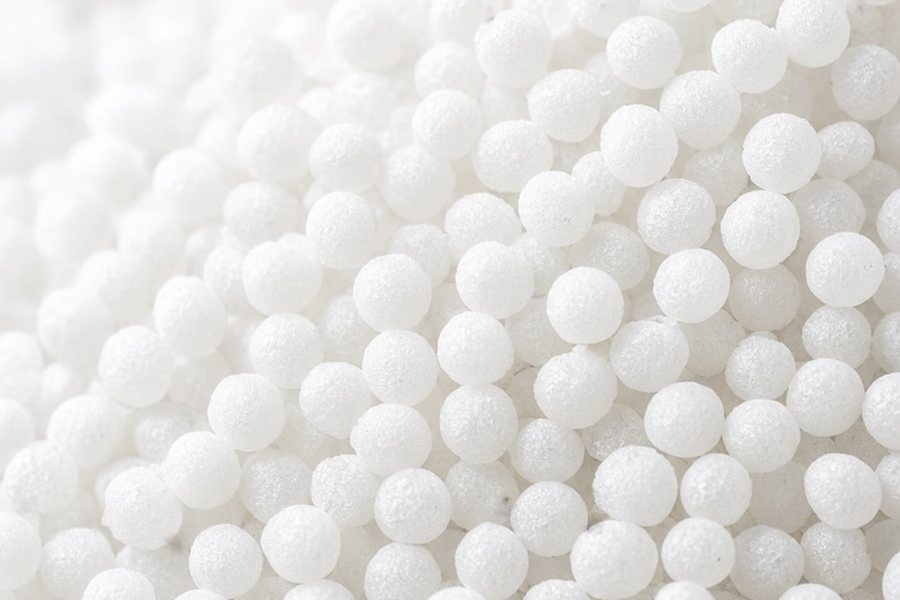
Most UP is traded as white crystals. SICO describes its product as free-flowing and crystalline, and Wellyou describes white crystals that dissolve easily in water (Wellyou Tech). Particle size limits differ from one producer to the next, so ask for a screen analysis if your dosing or blending equipment needs one.
Where UP fits in the water-soluble phosphate range
Acidity and fertigation compatibility
Fertigation suppliers buy urea phosphate mainly for its acidity. Haifa specifies pH 1.6 to 2.4 for a 10% solution (Haifa UP), and SICO gives the same range for a 1% solution, with 1.75 measured on a production batch (SICO).
Endeavour says the low pH lets calcium, magnesium and phosphorus stay together in solution where less acidic conditions would precipitate Ca-Mg phosphates, which is why UP goes into blends with calcium, magnesium and potassium nitrate. The same sheet says UP is often used to clean drip irrigation pipes (Endeavour). SICO says it keeps drip lines free of inorganic deposits, prevents clogging with hard water and is effective in alkaline soils (SICO).
Stock-tank advice differs between producers: Endeavour describes UP in blends with calcium and magnesium nitrate, while SICO advises a separate tank or separate timing for its UP and calcium or magnesium nitrate. Follow the supplier's compatibility guidance and run a jar test before you sell a blend recipe.
Urea phosphate vs MAP vs MKP
| Urea phosphate (UP) | MAP | MKP | |
|---|---|---|---|
| N-P2O5-K2O | 17-44-0 (Haifa: 17.5-44-0) | 12-61-0 | 0-52-34 |
| Water solubility | Fully water-soluble (SICO) | Fully water-soluble; 37.4 g per 100 g water at 20 °C (Haifa) | Insoluble matter 0.1% max (Haifa) |
| Solution pH | 1.6 to 2.4 (10% solution, Haifa) | 4.4 at 1% (Haifa) | 4.2 to 4.7 at 1% (Haifa) |
| Typical use | Fertigation in hard water and high pH soils, line cleaning, Ca/Mg blends | Fertigation, foliar, blends | P and K source for fertigation and foliar |
Sources: Haifa UP, Haifa MAP, Haifa MKP, SICO. Haifa describes its MAP as safer and less corrosive than urea phosphate because of its moderately low pH. For more on the other two products, see our MKP guide and DAP/MAP guide. For granular phosphate, see the TSP guide.
Specs to check on the COA
| Parameter | Published values | What to ask for |
|---|---|---|
| Total N % | 17.0% min (Haifa, SICO, Chemate) | Result per lot |
| P2O5 % | 44.0% (Haifa typical); 44% min water-soluble (SICO) | Water-soluble P2O5, not only total |
| Water insolubles | 1,000 ppm max, 700 ppm typical (Haifa); 0.1% max (Chemate, Wellyou); 0.5% max (Endeavour) | Limit stated in ppm or % |
| Moisture | 0.5% max (SICO, Chemate); 0.3% max (Wellyou) | Method and result |
| Solution pH | 1.6 to 2.4 at 10% (Haifa) or 1% (SICO) | The concentration it was measured at |
| Biuret | No figure in fetched sheets | Ask for a stated maximum |
| Free acid | No figure in fetched sheets | Ask for a stated maximum |
| Heavy metals incl. cadmium | As 0.01% max, heavy metals as Pb 0.003% max, F 0.05% max (Chemate tech grade); no cadmium figure found | Cd, Pb, As and Hg in mg/kg, checked against your market's limits |
| Particle size | No figure in fetched sheets | Screen analysis if your equipment needs one |
Because sellers measure pH at different concentrations, compare pH figures only when the concentration matches.
Packaging, shipping and storage
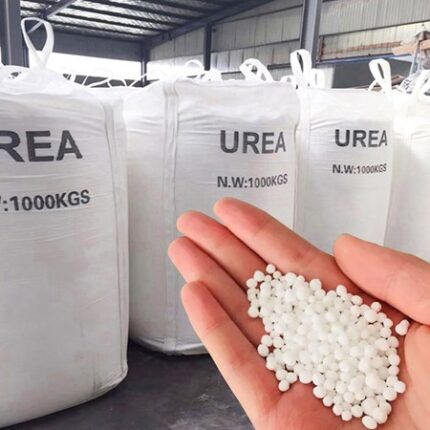
Haifa packs UP in 25 kg sewn open-mouth bags of woven, coated polypropylene (Haifa UP). Big bags are also offered in the trade. Agree the net fill in kg, the liner type and the pallet pattern in the contract.
UP is hygroscopic. Keep it dry and off the floor, and rotate stock first in, first out so it does not cake. Acidic solutions attack mild steel, so check that handling, dissolving tanks and dosing equipment are acid-resistant. Store it away from alkaline products.
How bulk urea phosphate is priced
The urea phosphate price is quoted on a weight basis under an Incoterm such as FOB, CFR or DAP, so compare offers on the same basis and confirm what the bag and pallet add. The main drivers are urea and phosphoric acid input costs, purity grade, origin, packaging format and freight. Put the grade and the COA limits above in the RFQ so every offer prices the same product.
Supplier checks for importers
- Ask whether the urea phosphate supplier is the producer or a trader, and request the producer's name and data sheet.
- Write the grade and every COA limit into the contract.
- Book third-party inspection for sampling, weight and packing at loading.
- Dissolve a pre-shipment sample in water and look for insolubles and haze.
- Compare COAs across several past lots to check consistency.
- Set payment terms such as a letter of credit tied to inspection documents.
Import compliance
Many markets require fertilizer registration, labeling in the local language with declared N and P2O5, and heavy metal limits that often include cadmium. Rules differ by country and change, so check the requirements with your local fertilizer authority or a customs broker before you order.
FAQ
What is urea phosphate fertilizer?
Urea phosphate (UP) is a crystalline fertilizer made from equal moles of urea and phosphoric acid, with the formula CO(NH2)2·H3PO4. It supplies nitrogen in urea form and fully water-soluble phosphorus, and its solution is strongly acidic. Importers buy it mostly for fertigation, water-soluble NPK blends and liquid fertilizer production.
What does 17-44-0 mean?
17-44-0 is the label grade in N-P2O5-K2O order: about 17% total nitrogen, 44% phosphate expressed as P2O5, and no potash. Producer sheets such as Haifa's and SICO's specify 17.0% minimum N, and SICO specifies 44% minimum water-soluble P2O5. Haifa labels its product 17.5-44-0, reflecting its typical nitrogen content.
Why is urea phosphate acidic, and why does it matter in fertigation?
UP contains phosphoric acid, and producer sheets give a solution pH of 1.6 to 2.4. In fertigation, that acidity helps keep calcium and magnesium from precipitating with phosphate, reduces scaling with hard water and helps clean drip lines. It also means tanks and fittings must be acid-resistant and stock-tank mixes should follow supplier guidance.
Urea phosphate vs MAP vs MKP: when does a distributor stock UP?
MAP (12-61-0) and MKP (0-52-34) have a solution pH of about 4.2 to 4.7, while UP (17-44-0) is far more acidic. Distributors stock UP for customers who fertigate with hard water or on high pH soils, need to clean drip lines, or blend calcium and magnesium nitrate into water-soluble formulas.
Buy or sell urea phosphate on GetFertilizer
Post a urea phosphate buy request on the GetFertilizer quote listings with your grade, COA limits, quantity in kg, packaging and Incoterm. Suppliers can list bulk urea phosphate under inorganic fertilizers. For full NPK formulations, see our NPK guide.